.png?width=225&height=60&name=Logo%20(7).png)




Your customers are complaining about late shipments. Orders are going out with the wrong items. Costs keep creeping up, but no one knows why.
Your first instinct is to look at the obvious numbers: on-time shipping rates, order accuracy percentages, monthly inventory turns. If those are in-line, the problem must be somewhere else.
Unfortunately, by the time a problem shows up in those numbers, it has already hit your bottom line. Late shipments don’t start at the dock. Inaccurate picks don’t happen at the moment of fulfillment. Spoiled items don’t expire overnight.
These unfortunate outcomes trace back hours, sometimes days, to smaller operational signals that went unnoticed because nobody was watching for them, and no one could even find the data if they knew to look.
Here’s the hard truth: The metrics you track determine the problems you can find. If you’re only looking at outcomes, you’ll always be reacting. Tracking operational signals puts you ahead of the game.
Let’s take a look at how to make it happen.
Outcome metrics tell you what happened. Operational numbers tell you why.
Let’s be honest. On-time shipping is a useful, headline-making number. A high rate feels good. A dropping rate raises alarms. But what are you supposed to do about it?
The same goes for order accuracy. A 98% accuracy rate sounds strong. But what if the 2% of errors are all in one client’s fulfillment workflow? Or all occur on one shift, or in one section of the warehouse? Hidden patterns lurk beneath the surface.
Monthly inventory turnover reports have a similar limitation. They arrive after the period closes, which means any inefficiency they reveal has already played out in full. By the time you're reading the report, the opportunity to course correct is long gone.
These are outcome metrics. They measure results. They are worth tracking, but they are a starting point, not a management tool.
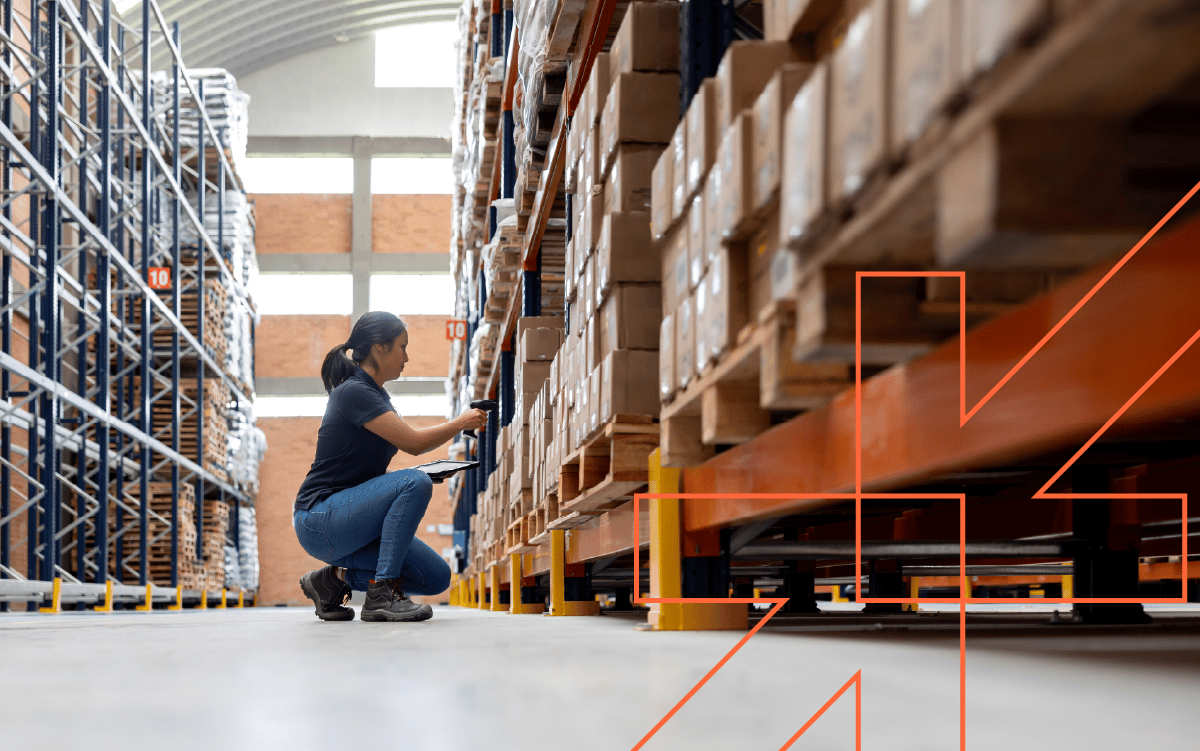
How Tracking Operational Signals Transforms Your Warehouse
The data that truly drives improvement lives earlier in the process, closer to where the work actually happens.
What if you had a way to measure workforce efficiency in real time, so you could see how your team performs against the volume in front of them? Are tasks completed within expected time windows? Are certain workers or shifts always behind? Is the right level of labor allocated to the right work at the right time?
It’s this kind of visibility that lets you spot capacity problems before they become fulfillment problems.
Task and workflow completion rates go even deeper. If a picking workflow has a consistent step where tasks stall, that’s a process gap, not a people problem. Seeing it in real-time lets you adjust the workflow in real-time too.
You can reassign tasks or intervene before an order misses its window.
Pick path efficiency is another signal worth watching. Back-tracked picks and inefficient routing add up across hundreds or thousands of daily transactions. The individual impact of a few seconds here or there could be small. The cumulative impact on labor cost and throughput? Huge.
Supply chain visibility across inbound receiving, storage and outbound fulfillment gives you a picture of how inventory is actually moving through your facility. It gives you an edge in compliance, too, in highly regulated industries like food, wine and cannabis.
That’s right—inventory tracking is a lot more than when products arrive and leave. Tracking things like expiration dates and putaway rates, and watching for bottlenecked staging areas and uneven loads helps you stay ahead, long before anything shows up in a monthly report.
To put it another way, it’s time to move from asking, “What went wrong last month,” to “What’s slowing us down today?”

Discover the warehouse ecosystem advantage: All your data in one place.
If you find yourself tracking the wrong metrics, it may actually not be your fault. In many warehouse operations, this is all the data your systems can see.
That’s especially true when order data lives in one platform, inventory in another, fulfillment activity in yet another, and shipping in one more. Building a complete operational picture requires someone to manually connect the dots.
By the time that work is done, the data reflects the past, not the present. An order placed with yesterday’s report could trigger an out-of-stock alert when the order is picked later today. A recall notice dated today may not catch up to orders placed tomorrow.
And when that happens, there’s no clean way to track it all back to the source. Was it a supply problem? A receiving delay? A workflow gap? A worker error? It takes even more time to find out.
That’s where the warehouse management ecosystem model changes everything.
InfoPlus is designed to connect with the systems already running your business: Your OMS, your ERP, your shipping carriers, your compliance partners and any custom platforms your operation needs.
Rather than requiring you to consolidate into a single new system, InfoPlus acts as the connective layer that brings data from every corner of your operation into one place.
The result is reporting that reflects your entire operation as it’s actually happening. Order velocity, labor efficiency, workflow completion, inventory status: it’s all visible in a single view, updated in real-time, without manual exports or reconciliation. No spreadsheets or reams of paper. No guesses.
And when a number looks off, you can trace it to the source immediately, all within InfoPlus. No logging into disconnected platforms. No digging for the right metric or cause. Just quick answers, every time.
That traceability turns these metrics from nice-to-have into a management tool. Because when metrics are connected to your full operational picture, you can know what’s happening, why, and you can have the time to do something about it.
The right metrics change behavior and improve margins.
The shift from measuring outcomes to tracking operational signals could be a significant change in how your team manages your warehouse from day to day.
When the floor has visibility into task completion rates and workflow efficiency, supervisors can make adjustments in the moment rather than at the end of the week. When labor data is visible in real time, shift planning improves. When pick path performance is tracked consistently, process improvements compound over time.
None of these changes require a major operational overhaul. They simply require better data, delivered sooner, connected to the workflows where decisions actually get made.
In our experience, warehouse operations with the best margins are not necessarily the ones with the highest volume. They’re the ones that catch small inefficiencies before they interrupt workflows. They adjust in real time rather than react after the fact. And they use operational data to build toward a better process instead of reporting on the last one.
And it all starts with measuring the right things.
Ready to see how operational data could transform your warehouse? Schedule a demo with InfoPlus.